

We met a lot of people in the medical profession during Alex’s illness—not just doctors and nurses, but all sorts of people attached to the process who I never thought about before. Most were awesome people—selfless and caring. Some were not. All of them taught me lessons about the reality of today’s medical profession.
When Dr. McCoy first saw something concerning in Alex’s X-rays, he sent her to see an oncologist at the University of Maryland Medical Center. The oncologist saw the same issue in the X-rays and ordered a biopsy.
I asked him to tell us what he was thinking. He wouldn’t.
“Let’s wait until the results come back,” he said.
We knew he was an oncologist. Clearly our presence there meant cancer was a concern. He wasn’t doing us any favors by telling us nothing. In fact, unknowingly, he was doing the opposite.
I had been diagnosed with cancer twice. The doctor who diagnosed melanoma said if I had waited another year to get the mole checked, I would have died.
The doctor who diagnosed bladder cancer was less alarming, but also talked about significant consequences.
Both cases were resolved with surgery and no further treatment. Cancer had been merely an inconvenience for me. Twice.
It would have been helpful to know he suspected Ewing’s sarcoma or osteosarcoma and exactly what that meant—certainly more than an inconvenience.
Alex’s biopsy results were inconclusive and the doctor wanted to do a more invasive biopsy. Alex balked because it would have put her on crutches for a couple of weeks in the middle of her semester. It was late October. She wanted to put off the biopsy for five weeks until her semester was over.
The doctor didn’t like that idea, but still didn’t tell us what he was thinking. Instead, he asked a colleague to consult with us.
This colleague looked over the X-ray, read Alex’s file, and asked her some questions. He confirmed that we should definitely find out what it is. But he said Alex’s X-rays hadn’t changed in a few months and the pain she felt was intermittent—intense every couple months, but nonexistent the rest of the time.
He said cancer doesn’t stay the same and cancer pain does not go away.
Then he looked me in the eyes and said, “If she were my daughter, I would be okay with waiting until December.”
That was the answer Alex and I wanted to hear, so that was the answer we accepted. She would have the procedure in five weeks when it better suited her schedule.
By the time December rolled around, things had changed. The tumor started to grow, and another simple biopsy identified it as Ewing’s sarcoma.
Then things kicked into high gear. We sat in a room with several doctors who all buzzed about the urgency of the situation. The same doctor who gave us the second opinion on the biopsy was introduced as Alex’s surgeon.
He looked at Alex and said, “If you were my daughter, you would have had that biopsy in October.”
Alex was angry. I was too—not because he gave us bad advice. Nobody was blaming him. Even when we talked about it in hindsight, Alex said she would have made the same choice knowing how things turned out.
But the reversal of what he had said previously, using almost exactly the same words, made us feel that he was not a person we could trust.
Then there was the doctor in charge of Alex’s case. Of all the doctors I’ve met in my life, his communication skills were the absolute worst.
One hundred percent clinical.
Zero compassion.
Zero empathy.
When all of the tests were done and we were ready to start treatment, he called us into a meeting room. He sat down at the table, opened his file, and stared straight into the folder. In the same monotone voice he might have used to tell us what time it was, he said, “You have metastatic Ewing’s sarcoma. The five-year survival rate is 30 percent.”
It was the worst day of our lives. He did nothing to offer any hope.
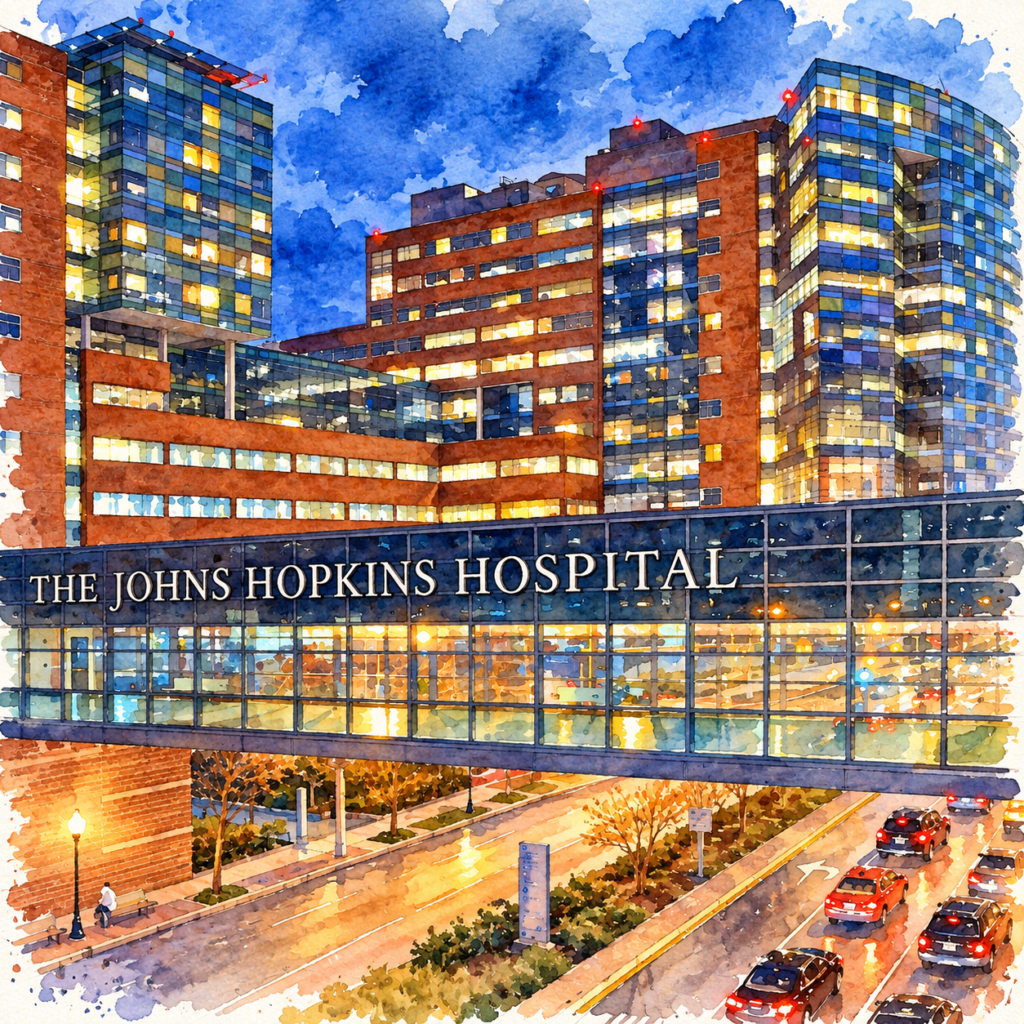
The only positive thing that came out of that meeting was advice to get a second opinion from Johns Hopkins Hospital. We didn’t expect a different diagnosis, but the doctors thought perhaps Hopkins would have access to some clinical trial that UMMC did not.
They didn’t. But what they did have was a much more personable staff.
We visited Johns Hopkins Hospital on a January morning and met Dr. David Loeb. Dr. Loeb was personable and cheerful, but he didn’t sugarcoat anything.

“You do have metastatic Ewing’s sarcoma,” he said, confirming the diagnosis. “It’s going to be hard, and you’re going to have to pause your life for the next several months. But there’s a 97 percent chance we will get you to remission and you’ll be able to go back to your life.”
Same diagnosis. Different delivery. Hopeful finish.
Dr. Loeb and his team left the room so Alex, her mother, and I could talk. It only took a few seconds to determine that if we had to go through something like this, Hopkins is where we wanted to be.
And Dr. Loeb was correct. Nine months later, Alex walked out of the pediatric oncology clinic in remission.
Mitch and Dakota are participating in the Million Mile this month in Alex’s memory. They are raising funds for childhood cancer research so Alex’s story doesn’t have to be someone else’s story.
You can donate here.
All donations are matched by Alex’s Lemonade Stand Foundation
Hi Mitch
Your books are phenomenal
I have the first. I still need to mail to you to sign. I do want to purchase e all of the
You are a wonderful writer.
Kim (Corkran)
Changed finalyto my married name 🥰
Thank you, Kim. There’s just the one book now (and a companion coloring book). But look for a new one in time for the holidays.
These story really hit so hard and I continue to pray everyday for my family, dear friends people in general.
Mitch you are such a strong individual and I’m so glad I was able to bring some light during this in our times at the hospital.
I know Alex is watching over you for sure and is glad you are where you need to be today.
Wow, I need more tissues buddy
Love ya