
When Dr. McCoy first saw something concerning in Alex’s X-rays, he sent her to see an oncologist. He gave her a name and address. All we knew was the office was somewhere in Baltimore.
I drove to College Park to pick up Alex. About 40 minutes later, we pulled up to the University of Maryland Medical Center—two million square feet of medical facilities covering several city blocks.
To say it was intimidating was an understatement. Given the reason we were there, it was overwhelming.
We parked and made our way to the main entrance. We had no idea where to go, so we asked the person at the security desk.
“You’ll find him in the ER,” he said.
I questioned why an oncologist would be in the ER.
“That’s what my directory says,” he responded.
The ER was about as far from the main entrance as you could get. Alex walked the entire distance with a bad leg. We got lost along the way, somewhere in the bowels of the hospital where it was clear patients weren’t supposed to be. Some interns saw us wandering and escorted us to where we needed to be.
We walked up to the desk. An older woman was working there. I asked for the doctor.
She opened a directory similar to the one the security guard looked through.
“He doesn’t work here,” she said.
My demeanor immediately changed.
“This is where we were told to go,” I snapped back, not hiding my frustration.
“He’s in the cancer center,” she said. The cancer center was about 200 feet from where we entered the building.
Still annoyed, I asked for directions again because we got lost the first time.
She looked at me impatiently. Then she looked at Alex and her expression softened.

“Wait just a minute,” she said. “I’ll take you there.”
She walked us all the way back to where we came in. I don’t recall any conversation.
When we arrived, she stopped, faced Alex, gave her a hug, and whispered, “God bless you” into her ear.
Medical professionals are often called caregivers. That woman was the only person we met at UMMC who I felt really cared about Alex.
It was a different story at Johns Hopkins Hospital, remarkably so.
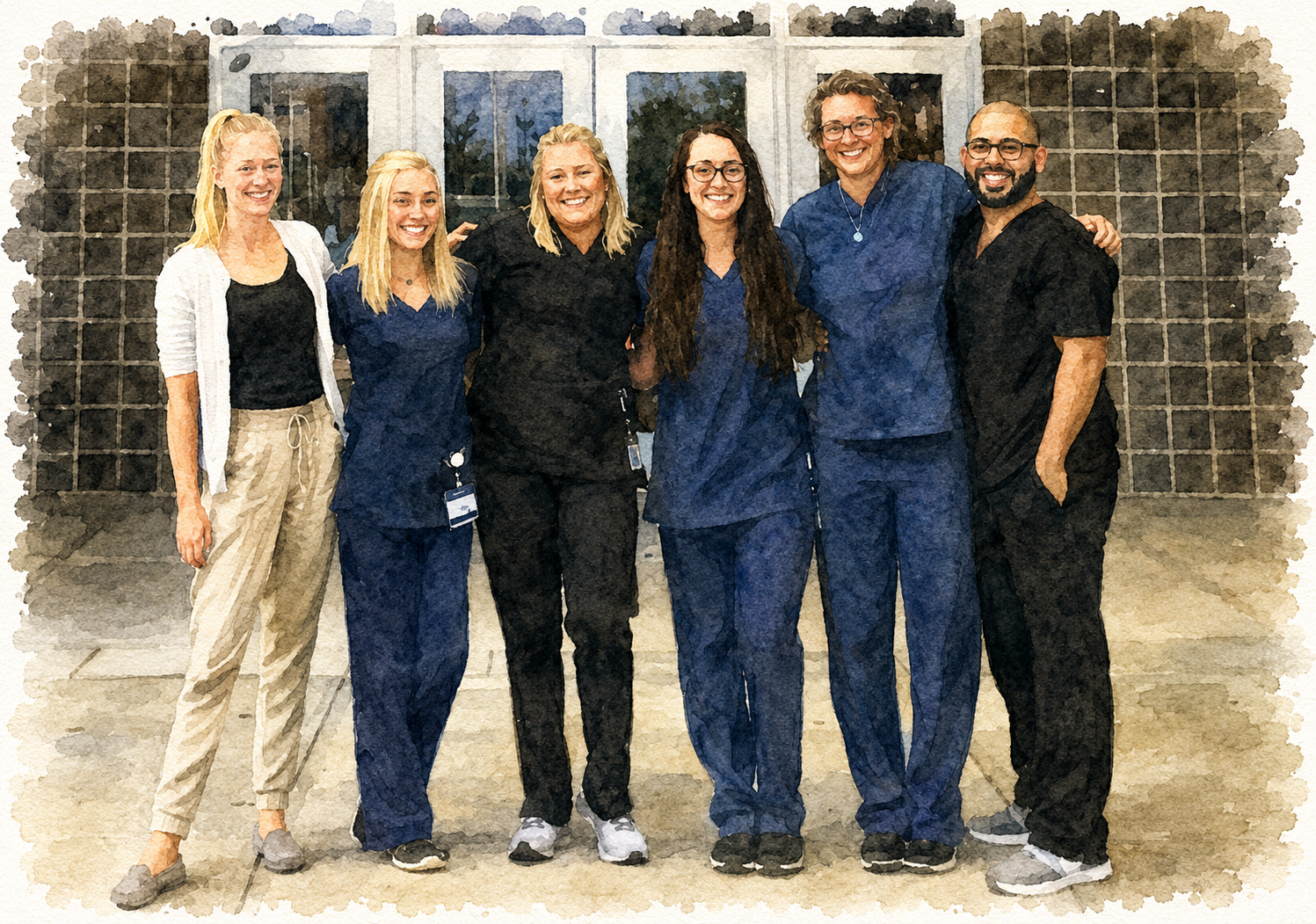
It has to be difficult caring for children with cancer. But the people at the Johns Hopkins Pediatric Oncology Clinic were always bright, cheerful, helpful, and, most of all, patient.
Cara was Alex’s favorite nurse at the clinic. She was exceptional. Whenever we needed something, Cara was just a phone call away.
Following the surgery to remove her femur, Alex received the pain medication Dilaudid through an IV. It worked remarkably well and her discomfort was minimal.
At her request, the doctors switched Alex to an oral dose of Dilaudid when she went home. That did not work nearly as well.
Alex was miserable.
“Call and get them to prescribe oxycodone again,” she demanded.
I called Cara, fully expecting a fight. I know the lengths to which people go to get pain medication. Even though I wasn’t one of those people, I expected her to push back when I asked to switch back to oxycodone. Instead, she said, “Give us an hour and you can pick it up from our pharmacy.”
Shortly after that, Alex was comfortable again.
During her relapse, Alex had to fly home from Florida for surgery. She wanted Dakota to fly with her.
Dakota had flown before, but the airlines were cracking down on companion animals on planes. The one Alex was flying required a written note from a doctor confirming that the animal should fly.
Alex had no patience for that kind of thing, so she assigned the task to me.
Again, I expected a hard time. Surely doctors have better things to do than write notes so dogs can fly.
Again, Cara delivered. I called. She told me to fax her the paperwork. I had it back and approved by the airline that afternoon.
Cara knew how important Dakota was to Alex.

There were also people who only pretended to care.
One afternoon while Alex was in the hospital, I stepped out of her room to get lunch. When I returned, Alex was reading a brochure from CareFirst. I asked what it was.
“My patient care advocate stopped by while you were gone,” she said. “She told me her company will review my care to make sure I’m getting the proper treatment.”
Alarm bells went off for me. Alex was very smart, but also very young. She was old enough to consent and make decisions about her care. And she was adamant about doing so. But she wasn’t experienced enough to understand that some people who pretend to be on your side really aren’t.
I asked if her patient care advocate was an oncologist.
“No.”
“Was she a doctor?”
“No.”
“Then how would she know better than some of the leading pediatric oncologists in the world what kind of treatment you require?”
Alex didn’t answer.
“Her responsibility isn’t to you,” I continued. “It’s to her company. My suspicion is she’s here to make sure the insurance company isn’t paying for something they don’t deem necessary. I would rather your doctors decide what’s necessary.”
I encouraged her to listen, but never to sign anything without talking to her parents or her doctors.
Then there are the people who care more than you know.
Shortly after her surgery in 2016, doctors determined Alex needed an antibiotic to protect against infection as she recovered. She was already on a medication called Bactrim, so they increased her dosage rather than adding an additional medicine.
Shortly after surgery, Alex started chemo again. It was very difficult. She was losing too much weight and couldn’t keep anything down.
It was scary. We couldn’t stop the chemo for fear of the cancer coming back. But she couldn’t continue the path of not keeping up her weight, strength, and energy levels.

When I wondered why the chemo was so much harder this time, Alex said the symptoms didn’t start with chemo. They started when the Bactrim was increased.
That day, we talked to one of her doctors. He agreed that Bactrim could be the problem. He stopped it, and Alex started feeling better.
Not long after that, a different doctor stopped by during one of Alex’s visits—Dr. Pratilas. The doctors at Hopkins worked as a team. So whoever was on call that day was the doctor you saw when you were in the clinic for chemo.
This doctor picked up Alex’s chart and said, “You need to be on Bactrim.”
I explained the difficulty Alex had with Bactrim and why it was stopped.
“She needs to be on Bactrim,” Dr. Pratilas repeated.
I looked at Alex. Sometimes she wanted a silent partner. Other times she wanted an advocate. This was the latter.
I pushed back harder, and perhaps not pleasantly, about our opposition to Bactrim.
Dr. Pratilas responded with equal bluntness, letting me know her medical expertise was superior to mine.
“I’m an oncologist who has been treating children for years,” she said.
“So was the doctor who took her off Bactrim,” I replied.
Dr. Pratilas abruptly left the room. Further conversation would not have been productive.
And of course she was right. Alex needed an antibiotic. I never thought my medical knowledge was comparable to hers.
But I did know my daughter. And I knew what that particular medication did to her. And I knew that there were always other solutions.
About 30 minutes later, another doctor came into the room and said Alex could choose another antibiotic that was less convenient because it had to be administered by infusion. She chose that one and never had a problem with it.
The next time I met Dr. Pratilas was when Alex relapsed.
Alex moved to Florida when she was in remission. Dr. Loeb referred her to a colleague at the Moffitt Cancer Center in Tampa. After about 19 months of remission, a mass in Alex’s leg was confirmed as a recurrence of Ewing’s sarcoma.
Alex, her mother, and I returned to Hopkins to discuss next steps. We were met by a team of doctors. There were seven or eight people in the room telling us how they were going to attack this recurrence. In spite of what I knew about Ewing’s sarcoma recurrence, it felt hopeful. Dr. Pratilas led that team.
She was knowledgeable, compassionate, and she went the extra mile for Alex time and time again.
When Alex, against her doctors’ wishes, decided to start veterinary school and undergo treatment in Florida, Dr. Pratilas made that happen. She managed Alex’s case from Maryland. She was with Alex every step of the way.
Alex looked up to Dr. Pratilas. I think she saw her as a role model—the type of doctor Alex herself hoped to be when she graduated from veterinary school.
If Dr. Pratilas remembered me from two years prior, she never mentioned it.
Things didn’t go well for Alex in Florida. Vet school was great, but nothing they tried kept the cancer at bay.
Alex was barely able to finish the semester. When it was over, we knew the next semester wasn’t going to be possible right away, but there was still hope of remission again and a return to Florida.
That hope ended our first day back in Maryland. We headed to Hopkins fully expecting to discuss how we were going to continue the fight.
This time, instead of a team, we were met by Dr. Pratilas and her resident, Dr. Chen.
Dr. Pratilas said the treatment Alex had in Florida was enough to get her home to Maryland, but it was completely ineffective against the cancer. Tears welled up in her eyes as she told Alex the cancer would take her life.
That was the moment hope disappeared.
Dr. Pratilas said she would continue to treat Alex for as long as treatment brought her comfort, but there was no hope of beating the cancer.
She asked if we had any questions.
We didn’t.
She left the room so we could have some time alone.
I put my head in my hands and started to cry.
Alex put a hand on my shoulder and said, “I’m not good at this.”
I composed myself and told her it was okay. She shouldn’t be the one comforting me.
When I left the room, I found Dr. Chen. I asked her how long Alex would live.
She couldn’t say for certain.
“Will she see Christmas?” I asked. It was early December.
“Oh yes. She will probably see next Christmas too,” Dr. Chen responded.
Seven weeks later, Alex was gone.
Most of those seven weeks were spent at Hopkins.

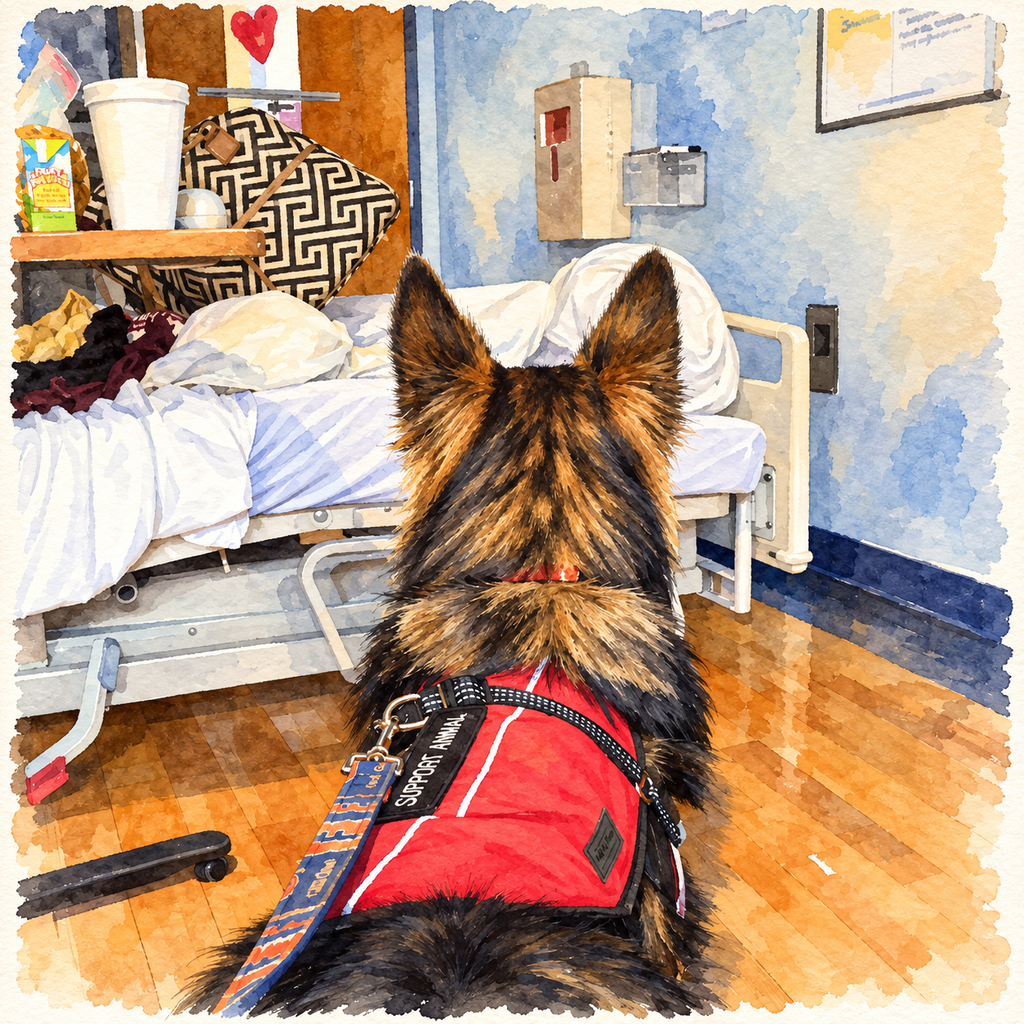
Dr. Pratilas did everything she could for Alex. She even allowed Dakota onto the pediatric oncology floor against hospital policy.
That lasted less than 24 hours. Dakota spent one night with Alex. In the morning, the rounding doctors told Alex Dakota had to go. They just couldn’t risk having an animal on a floor with immunocompromised children.
This time I didn’t need to look at Alex to see if she wanted an advocate. I followed the doctors into the hall.
“I know why Dakota can’t be on this floor and I respect that,” I said. “But you need to move Alex to a floor where Dakota is allowed.”
“We need to have cancer patients on the oncology floor where staff is trained to take care of them,” they said.
“I appreciate that too,” I pushed back. “But you are not treating Alex for cancer anymore. You’re providing palliative care. They can do that on another floor.”
“If we have to choose between you and Dakota, we choose Dakota.”
Alex was moved to another floor that night. Dakota stayed with her until she was able to leave the hospital.
Alex’s time at home didn’t last long. It was only days before she was headed back to Hopkins for what we knew would be the rest of her life.
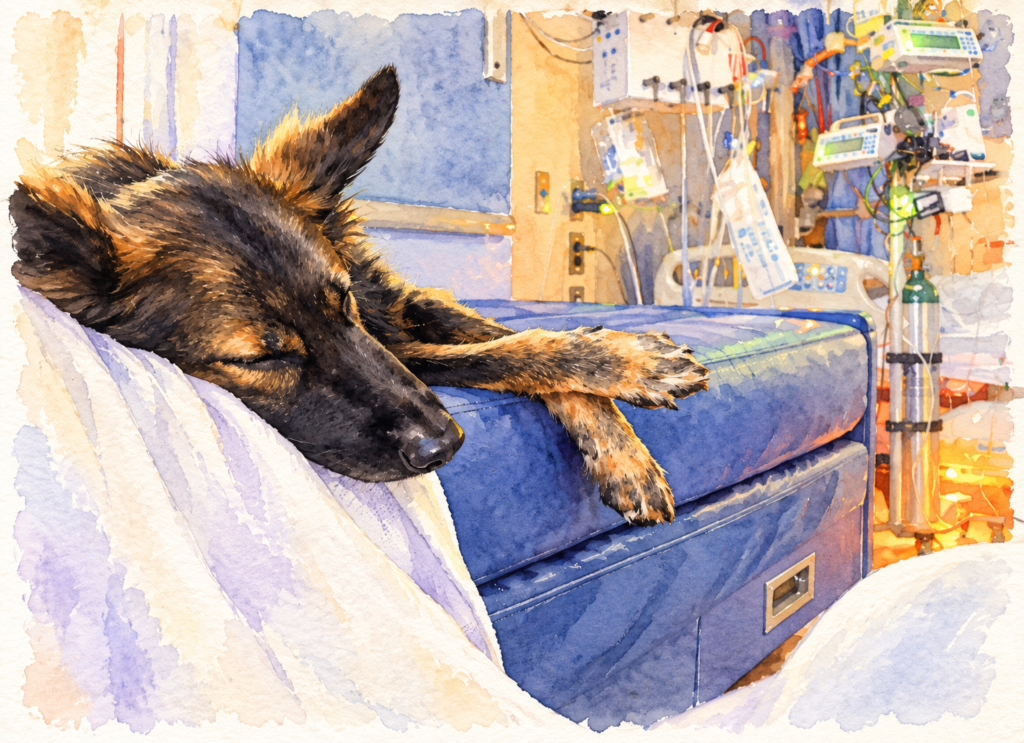
We made sure she was on a floor where Dakota could stay.
That night, Dr. Pratilas came to visit. She sat down next to Alex and told her she and Dakota were coming back to the oncology floor the next day. Dr. Pratilas and her team researched the issue and found no medical reason Dakota couldn’t be in Alex’s room. She went to the highest level of the hospital to clear Dakota’s presence.
“You’re one of ours,” Dr. Pratilas said to Alex. “We want you with us.”
There were rules we had to follow with Dakota. We did, and she stayed with Alex until the day she died.
As I moved through my own grief over losing Alex, it occurred to me how difficult it must be for caregivers—especially those who show up every day to treat childhood cancer, knowing they are going to lose more battles than they will win.
They never give up.
Alex never gave up.
How can I?
So, again, one donation at a time until the scholarship is funded.
One donation at a time until cancer is cured.
Mitch and Dakota are participating in the Million Mile this month in Alex’s memory. They are raising funds for childhood cancer research so Alex’s story doesn’t have to be someone else’s story.
You can donate here.
All donations are matched by Alex’s Lemonade Stand Foundation.